Banning Teens from VPNs and Social Media Won't Protect Them
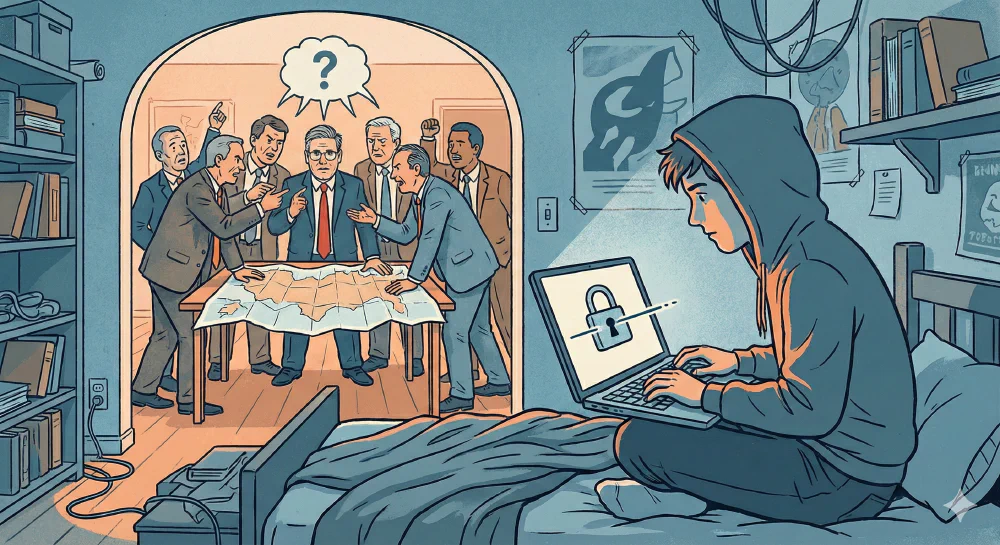
The UK government wants to ban under-16s from social media and VPNs. On paper, it sounds like a sensible move to protect children. In practice, it’s completely useless — and here’s why.
A Ban That Misses the Point
Let’s start with the obvious: most teenagers know more about technology than their parents. And, frankly, more than most of the politicians debating these laws. A VPN — short for Virtual Private Network, which is basically a tool that creates a private, encrypted tunnel for your internet traffic — is something a moderately clued-up teenager can set up in minutes. Banning it won’t stop them using it. It’ll just push the whole thing underground.
The same goes for social media bans. If your teenager is already on Instagram, TikTok, or Snapchat, taking it away by law won’t make them shrug and pick up a book. They’ll find workarounds. They always do. And the only lesson they’ll take from it is: don’t trust the government, and don’t trust your parents.
That’s not the outcome anyone wants.
The Real Problem Isn’t the Kids
Here’s what frustrates me. While the government is busy trying to police teenagers, the companies that actually created this mess are getting off scot-free. Meta — the company behind Facebook, WhatsApp, and Instagram — continues to operate platforms that are, by the admission of some of its own former employees, designed to be addictive. Facebook’s founding president Sean Parker warned that the platform was built to exploit “a vulnerability in human psychology” and admitted the founders “understood this consciously — and we did it anyway.” Former head of user growth Chamath Palihapitiya told Stanford he feels “tremendous guilt” and that social media’s dopamine-driven feedback loops are “ripping apart the social fabric of how society works.” Meanwhile, former Google design ethicist Tristan Harris has called social media “Big Tobacco for our brains.” The cat’s out of the bag, as they say.
And yet, instead of holding these companies to account, we’re letting them get away with paying a pittance in tax. A TaxWatch UK investigation found that seven major tech groups — Adobe, Alphabet (Google), Amazon, Apple, Cisco, Meta, and Microsoft — dodged an estimated £2 billion in UK tax in 2021 alone. Between them, they generated roughly £60.5 billion in UK revenue and an estimated £14.8 billion in profit, yet paid just £753 million in tax. That’s an effective rate so low it would make your accountant blush. The focus is entirely in the wrong place.
X (formerly Twitter) is another example. The platform has become a breeding ground for misinformation and abuse, and very little is being done to rein it in. If a platform can’t demonstrate that it’s keeping its users — especially children — safe, then perhaps that platform shouldn’t be allowed to operate here until it gets its house in order.
Prohibition Has Never Worked
Think about it. We’ve seen this pattern play out time and again. When streaming services got greedy and started charging more for less, piracy came roaring back. People didn’t suddenly become criminals — they just felt they were being squeezed, and they found another way. The same applies to speed limits, alcohol prohibition in the 1920s, or just about any restriction you care to name. Where there’s a will, there’s a way.
Now apply that to the digital world, where circumventing restrictions is — to borrow a phrase — super easy, barely an inconvenience. A teenager with a basic understanding of technology can get around just about anything the government puts in place. Banning VPNs for under-16s is like putting a padlock on a garden gate when the fence has no walls.
Backdoors Won’t Help Either
There’s a related conversation happening around forcing technology companies to build backdoors into encrypted services — essentially, secret entry points that let authorities access private communications. The idea is that this would help catch criminals and protect children.
This isn’t hypothetical. In early 2025, the UK government used the Investigatory Powers Act to order Apple to build a backdoor into its encrypted iCloud backups. Apple refused and instead pulled its strongest encryption feature from UK users entirely. The government tried again in October 2025 with a narrower order. As the EFF warned, any backdoor built for the government puts everyone at greater risk of hacking, identity theft, and fraud.
The problem is that a backdoor for the good guys is also a backdoor for the bad guys. Security experts are overwhelmingly against this. Once you weaken encryption, you weaken it for everyone: businesses, hospitals, banks, individuals. The people debating these laws often don’t understand the technology they’re legislating, and the experts who do understand it are shouting from the rooftops: please don’t do this.
So What Should We Actually Do?
Instead of banning things and hoping for the best, here’s what would actually make a difference:
Educate, don’t prohibit. Teach young people about digital literacy, online safety, and critical thinking. Help them understand how social media algorithms work and why these platforms are designed to keep them scrolling. An informed teenager is far better protected than a banned one.
Limit screen time sensibly. Yes, parents should set boundaries. But those boundaries need to come with conversation, not just confiscation. Take the devices away and lock them up, and your teenager will hate you for it — and still find a way around it.
Hold the platforms to account. This is the big one. We need strong, enforceable regulation that puts the responsibility where it belongs: on the companies profiting from our children’s attention. If Meta can’t prove it’s not manipulating young users, it shouldn’t be allowed to operate unchecked. If X can’t control the abuse on its platform, there should be real consequences.
Stop giving tech giants a free pass. Tax them properly. Fine them meaningfully when they breach regulations. Make it more expensive to behave badly than to do the right thing.
The Bottom Line
The UK is heading in a worrying direction. Freedoms are being eroded in the name of safety, while the corporations that actually pose the risk remain untouched. Banning teenagers from VPNs and social media isn’t protecting them — it’s theatre. And it’s theatre that treats our young people as the problem, when in reality, they’re the ones being exploited.
We don’t need more bans. We need better education, smarter regulation, and the political courage to go after the real culprits. Our teenagers deserve better than this.
What’s Your Experience?
How are you teaching digital literacy at home or in your organisation? Do you think bans work, or is education the answer? Leave a comment below or reach out on social media.
If you’d like to talk through how to build a practical digital safety strategy for your team or family, hit the “Let’s talk” button and book a free explorative call.

Axel Segebrecht is founder and director of Be Braver Ltd, a UK-based technology consultancy specialising in digital sovereignty, self-hosted infrastructure, and FOSS migration for European businesses.

Discussion