Is AI Making Cybercrime Easier? The Rise of the Instant Hack
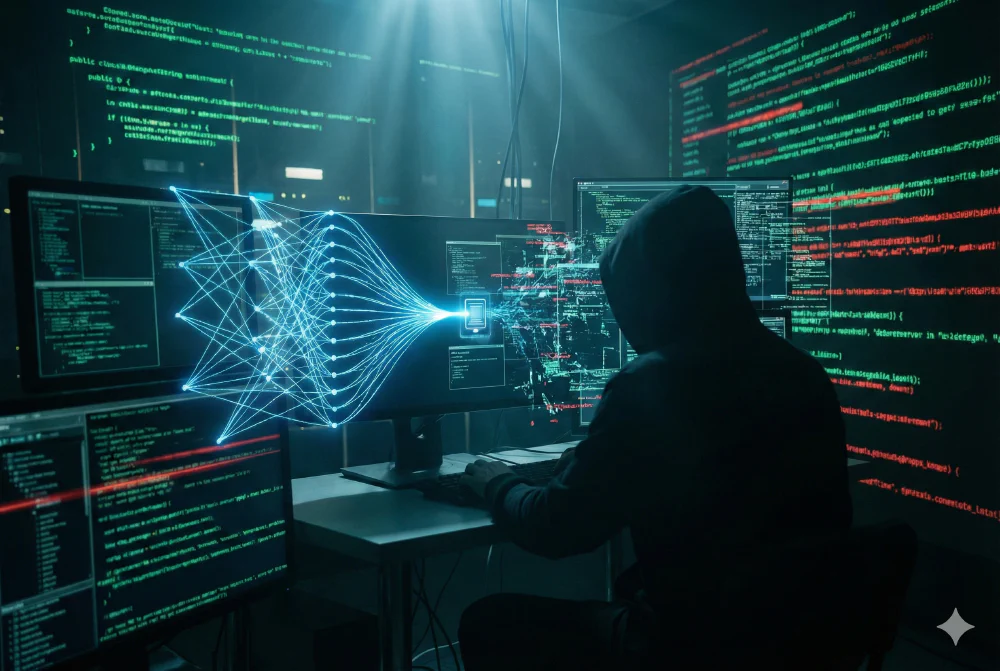
Since the launch of ChatGPT—and arguably even before it became a household name—the world of digital security has shifted on its axis. We are currently living through what I often call the most dangerous era for cybersecurity. While global tensions play their part, the staggering rise of AI as a hacking tool is the real game-changer. It has turned what was once a craft into a high-speed assembly line.
From ‘Hand-Crafted’ to High-Speed
In the old days (which, in tech terms, was only a few years ago), a successful hack was a long, laborious process. It was essentially a complex software development project. You needed a team of researchers, hackers and analysts working in tandem for weeks or even months. They had to manually scout a target, find a tiny crack in the armour, and then carefully build a bespoke plan to get inside.
Because it required so much human capital and time, hackers had to be selective. They couldn’t just attack everyone at once; they had to invest heavily in their projects to see a return.
The New Blackmail Economy
Today, the goal of these attacks has evolved into a sophisticated blackmail operation. It isn’t just about Ransomware—where a hacker locks your files and demands money for the key. It’s now about juicy data that can be leveraged to blackmail targets.
Hackers break into a system, find your most sensitive information, and then flip the script. They essentially say, “We know what you did last summer, and if you don’t pay up, we’re posting this on social media.” This data doesn’t even have to be scandalous. It could be your company’s secret sauce—trade secrets, client lists, or financial forecasts. For a public company, a leak like this could tank the stock price or completely undo years of brand building. AI makes finding this needle in the haystack incredibly easy.
How AI Does the ‘Heavy Lifting’
The most shocking part of this transition is the efficiency. What used to take a team of five people three months can now be done by one enterprising individual in a single week. Here is how AI—specifically Large Language Models (LLMs)—is doing the heavy lifting:
- Automated Research: You can set an AI to scan a target and cross-reference it with the latest exploits (tools or code that take advantage of a flaw). It can find a match in minutes.
- Instant Exploitation: AI can help write the code to break in. It can even look for Zero-Day vulnerabilities—security flaws that have just been discovered and haven’t been patched yet—and write a custom piece of malware (malicious software) to attack them.
- The Debugging Partner: If the malicious code doesn’t work the first time, the hacker doesn’t have to spend days fixing it. They simply ask the LLM to “debug” the malware, making it faster, better, and more effective with every iteration.
The Falling Barrier to Entry
When people say cybersecurity is the hottest topic in tech right now, this is why. The barrier to entry has hit the floor. The quality of attacks is higher, the cost is lower, and the time-to-success is shorter.
Previously, you needed deep technical expertise to be a threat. Now, you just need an AI and a bit of determination. This democratisation of hacking means that the sheer volume of attacks is increasing because the “man-hours” required to launch them have vanished. It is no longer a group of specialists; it is one person with a powerful algorithm.
Building Your Multilayered Defence
With the quality and speed of attacks rising, we can no longer rely on simple solutions. You need a multilayered defence strategy. This isn’t just about having an antivirus; it’s about a total approach to security:
- Start with Yourself: Take the subject seriously. Awareness is your first line of defence. If you treat your digital security as an afterthought, you are an easy target.
- Strong Foundations: Use robust, unique passwords for every account. A password manager is your best friend here.
- MFA is Non-Negotiable: Always use Multi-Factor Authentication. Even if an AI helps a hacker steal your password, MFA provides that vital second hurdle that is much harder to automate.
- Zero Trust: Treat every unexpected email or data request with healthy scepticism. If an email feels slightly off, even if the English is perfect, trust your gut.
The instant hack is here, and while the speed of these new threats is shocking, staying informed is the first step to staying safe. We must adapt as fast as the tools do. Small businesses are set to suffer even more as they often lack the multi-layered defences bigger corporations benefit from. It does’t have to be like that.
Further reading
- National Cyber Security Centre (NCSC) - Top Tips for SMEs
- Impact of AI on cyber threat from now to 2027
- The Rise of Malicious AI: 5 Key Insights from an Ethical Hacker
What’s Your Experience?
Have you noticed an increase in AI-driven attacks targeting your business? What’s working for you in terms of defence? Leave a comment below or reach out on social media.
If you’d like to talk through how to build a multilayered defence that works for your business, hit the “Let’s talk” button and book a free explorative call.

Axel Segebrecht is founder and director of Be Braver Ltd, a UK-based technology consultancy specialising in digital sovereignty, self-hosted infrastructure, and FOSS migration for European businesses.

Discussion